
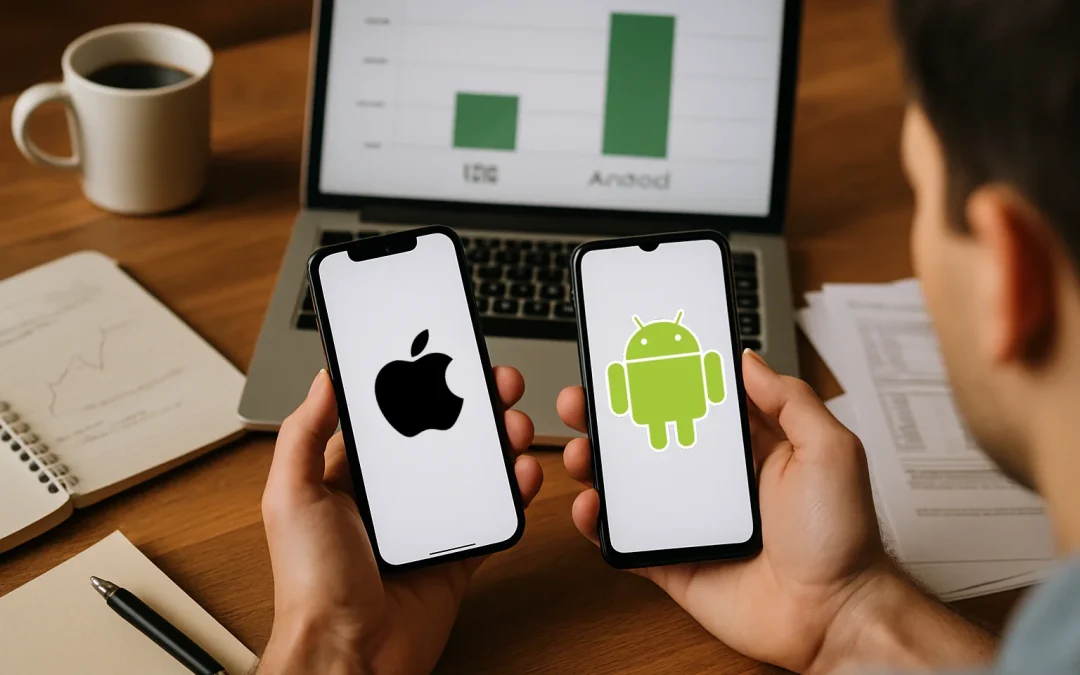
In most cases, iPhone and Android users earn roughly the same amounts from money-making apps, including survey apps. The bigger differences usually come from which apps are available in your country, how much time you spend, and how many high-paying tasks you qualify for, not from your phone brand. iPhone users may have access to slightly more “premium” brand research in some markets, while Android users often have more app choices overall. Either way, earnings are typically modest side income, not a replacement for a job.
Table of Contents
- How Paid Survey Sites Work
- Pros of Paid Survey Sites
- Cons of Paid Survey Sites
- Realistic Earnings Expectations
- Who Paid Surveys Work Best For
- Who Should Probably Avoid Paid Surveys
- Frequently Asked Questions
Quick Summary
- Paid survey sites and apps pay users small amounts to share opinions with market research companies.
- Main advantage: very low barrier to entry and can be done from almost any smartphone.
- Main limitation: low hourly pay and frequent disqualifications from surveys.
- Realistic earnings: usually $20–$300 per month as side income, not a full-time wage.
How Paid Survey Sites Work
Paid survey sites and apps connect companies that need consumer opinions with people willing to answer questions for small rewards. Brands and research firms pay these platforms to reach specific types of users, and the platforms share a portion of that money with you.
To get started, you usually create an account with your email address or through a social login. During sign-up, you complete a profile with basic information such as age, gender, location, household size, and interests. This profile helps the platform match you with surveys that fit the target audience requested by advertisers.
Once your profile is set up, you can browse available surveys in the app or wait for notifications. Each survey shows an estimated time and reward, often in points that convert to cash or gift cards. Before the main survey, you typically answer a few screening questions. If your answers match what the client needs, you continue; if not, you are disqualified and may receive little or no reward for that attempt.
Payouts usually work through points or cash balances. After you reach a minimum threshold, you can redeem your earnings. Common minimums range from $5 to $25, depending on the platform and payout method. Many apps offer PayPal, bank transfer, or gift cards, while some focus on gift cards only.
Most survey apps are available on both iPhone and Android, but some are exclusive to one platform or have better performance on one system. In practice, though, the earning potential per survey is similar across devices; the main difference is how many reliable apps you can install and how often they have work for your region.
Pros of Paid Survey Sites
Low barrier to entry
Almost anyone with a smartphone and internet connection can sign up for survey apps. You do not need formal qualifications, work experience, or advanced technical skills.
No special skills required
Surveys are usually simple multiple-choice or short-answer questions about products, ads, or everyday habits. If you can read and follow instructions, you can participate, regardless of whether you use an iPhone or Android device.
Flexible timing
You can complete surveys whenever you have spare time: commuting, during TV breaks, or while waiting in line. There are no fixed schedules, and you can stop at any time.
Can be done from a phone
Most major survey platforms offer mobile apps or mobile-friendly sites. This makes it easy to earn small amounts from either iPhone or Android without needing a computer. If you want to explore more phone-based options, you can look at guides on how to make money using only your phone.
Occasional bonus offers
Some apps offer streak bonuses, referral rewards, or higher-paying special studies. These can slightly boost your earnings if you use the apps consistently and qualify for targeted research.
Cons of Paid Survey Sites
Low pay per survey
Most surveys pay modest amounts, often equivalent to a few cents to a couple of dollars for 10–20 minutes of work. This leads to low effective hourly rates, especially when you factor in disqualifications.
Frequent disqualifications
Screening questions are designed to filter for very specific demographics or behaviors. It is common to start a survey and then be told you do not qualify after a few questions, earning little or nothing for that time.
Limited survey availability
Not everyone sees the same number of surveys. Availability depends heavily on your country, age group, and profile. Some users see multiple surveys daily, while others may only see a few per week.
Minimum payout thresholds
Many platforms require you to reach a minimum balance before you can cash out. If you stop using the app early or get few surveys, it can take a long time to reach that threshold, and some users never cash out at all.
Time vs reward tradeoff
When you factor in the time spent checking for new surveys, answering screeners, and dealing with disqualifications, the effective hourly rate is often low. For most people, surveys are better viewed as a way to earn small extra amounts rather than a serious income stream.
Realistic Earnings Expectations
Whether you use an iPhone or Android phone, realistic earnings from survey apps are similar. The main drivers are how many surveys you receive, how often you qualify, and how much time you are willing to spend.
For beginners, a realistic range is around $20–$100 per month. This assumes you sign up for several reputable apps, check them regularly, and complete surveys when available. Early on, you may also spend time learning which apps are worth your effort.
Regular users who consistently check multiple apps and respond quickly to notifications might earn around $100–$300 per month. This level usually requires treating survey apps as a routine habit, using both general survey platforms and niche apps such as receipt-scanning or task apps. For example, combining survey apps with receipt-scanning apps that pay you can slightly increase your total earnings.
Heavy users who reach $300 or more per month are uncommon. They often live in countries with strong advertiser demand, fit desirable demographics, and use many different platforms, including higher-paying research communities and product testing opportunities. Even then, this income is usually inconsistent and not guaranteed.
Overall, survey apps are best viewed as side income. They can help cover small expenses, save for occasional purchases, or fund digital subscriptions, but they rarely provide the stability or scale of a part-time job.
As a simple example, imagine a user who completes three surveys per day at an average of $1 each, five days per week. That works out to about $60 per month. Some days will have more surveys, some fewer, and disqualifications will reduce the effective rate, but this illustrates the general scale of earnings.
Hype vs Reality
Online, survey apps are often promoted with headlines suggesting you can “make hundreds per day from your phone” or “quit your job with survey income.” These claims usually highlight rare best-case scenarios or combine multiple income sources without clearly explaining the time required.
In reality, most users experience modest, irregular earnings. Surveys appear and disappear quickly, many attempts end in disqualification, and some days have no suitable surveys at all. The effective hourly rate is often below minimum wage in many countries.
Yes, paid survey sites can generate small amounts of extra income, but they are rarely a full-time income source.
Another common source of hype is selective screenshots of large balances or single high-paying studies. While these can happen, they are not typical. Most of your activity will involve smaller surveys paying $0.25–$2 each, and you may need to combine several apps, including other money-making apps that pay through PayPal or cash, to reach your monthly goals. For example, you can explore apps that pay you through PayPal if you prefer cash over gift cards.
Paid surveys can be a simple way to earn small amounts of extra cash, but they work best as occasional side income rather than a primary job.
Who Paid Surveys Work Best For
Survey apps tend to work best for people who want low-effort, low-commitment ways to earn a bit of extra money. The specific phone you use matters less than your expectations and habits.
Students
Students with irregular schedules can fit surveys around classes and study time. The earnings will not cover tuition, but they can help with small expenses like snacks, subscriptions, or transportation.
People looking for small extra cash
If your goal is to earn a little extra money for discretionary spending, surveys can be a reasonable option. They are especially useful if you already spend time on your phone and want to turn some of that time into small rewards.
Users with spare time on mobile devices
People who frequently wait in lines, commute on public transport, or have short breaks during the day can use that time for surveys. Both iPhone and Android users can benefit equally here, as most major apps support both platforms.
People who want low-skill online income
If you are not ready to learn more complex online skills or commit to freelance work, surveys offer a simple starting point. They can also be combined with other easy tasks, such as the types of activities listed in apps that pay you for everyday tasks.
Who Should Probably Avoid Paid Surveys
Despite their convenience, survey apps are not a good fit for everyone. Certain expectations and needs do not align well with how these platforms work.
People needing full-time income
If you need to replace a full-time job or cover major expenses, survey apps are unlikely to be sufficient. The earnings are too low and inconsistent to provide reliable, long-term financial support.
Those expecting fast money
Survey apps do not usually provide instant large payouts. It can take days or weeks to reach the minimum cash-out threshold, especially when you are just starting and still learning which apps offer the best opportunities.
Users who dislike repetitive tasks
Many surveys ask similar questions about your demographics, shopping habits, or media consumption. If you quickly get bored with repetitive forms and rating scales, you may find the process frustrating.
People unwilling to complete screening questions
Screeners are a core part of survey work. If you are not willing to answer short sets of questions that sometimes lead to disqualification with little or no pay, survey apps will likely feel like a poor use of time.
If you need stable, predictable income, it is usually better to look at part-time work or higher-paying online options rather than relying on survey apps alone.
Scam Awareness and Safety Tips
Most well-known survey apps are legitimate, but there are also low-quality or outright scam sites. Being cautious helps you avoid wasting time or exposing your personal information.
Red flag: Upfront fees
Legitimate survey platforms do not charge you to join. If a site asks for a membership fee or payment to “unlock high-paying surveys,” it is a strong warning sign.
Red flag: Promises of large earnings
Be skeptical of any app or site that promises you can earn hundreds of dollars per day just by answering surveys. These claims are not consistent with how the industry typically works.
Red flag: Requests for sensitive personal information
While basic demographic questions are normal, you should be cautious if a survey or app asks for your full Social Security number, full banking login details, or other highly sensitive data unrelated to payment processing.
Red flag: Fake payment proof screenshots
Some sites use edited or misleading screenshots to suggest huge payouts. Look for independent reviews, clear terms and conditions, and realistic earning descriptions instead of relying on promotional images.
Stick to well-reviewed, established survey apps, and never pay to join or share more personal information than is reasonably necessary for demographic targeting and payment.
Frequently Asked Questions
Are paid survey sites legit?
Many paid survey sites and apps are legitimate, but they generally pay small amounts. The key is to use established platforms with clear terms and realistic earning claims, and to avoid any site that asks for upfront fees or sensitive information.
How much can you realistically make?
Most users earn between $20 and $300 per month, depending on time spent, demographics, and the number of apps used. Earnings above that level are possible but uncommon and usually require ideal conditions and heavy participation.
Do iPhone users earn more than Android users?
In practice, earnings are similar for iPhone and Android users on the same platforms. Differences usually come from app availability in your region and how much time you spend, not from the type of phone you own.
Which survey sites pay the fastest?
Apps that offer PayPal or instant gift card codes tend to pay out faster once you reach the minimum threshold. Some also offer “instant pay” options, though this usually refers to quick processing after cash-out rather than immediate earnings.
Why do surveys disqualify users?
Surveys target specific demographics or behaviors, such as age ranges, job roles, or purchase history. If your answers do not match what the client needs, you are disqualified so they can focus on the intended audience.
Can you take surveys on your phone?
Yes, most major survey platforms have mobile apps or mobile-friendly websites, and you can use them on both iPhone and Android. Many users complete most of their surveys on their phones rather than on a computer.
Are there better-paying alternatives to surveys?
Some users find higher-paying opportunities in task apps, gig work, or freelance platforms. You can also explore lists of apps that pay real cash if you want to move beyond basic survey earnings.
Survey apps are best treated as a small, flexible side activity rather than a main income source, regardless of whether you use an iPhone or Android device.
Final Authority Summary
Survey apps and sites offer a simple way to earn modest extra income from your phone, and the earning potential is broadly similar for both iPhone and Android users. The main benefits are low barriers to entry, flexible timing, and the ability to earn small rewards during spare moments. However, low pay, frequent disqualifications, and limited survey availability mean they are not suitable as a primary income source.
People who want occasional side income, especially students or those with idle phone time, may find survey apps worthwhile if they keep expectations realistic. Users who need stable, substantial earnings or dislike repetitive, low-paying tasks should look for other options, such as part-time work or more advanced online income methods. Ultimately, your phone brand matters far less than your goals, your available time, and your willingness to accept modest, irregular rewards.

Madison researches legitimate ways to make money online, focusing on surveys, apps, and beginner-friendly income methods. Her goal is to provide clear, realistic guidance without hype.